
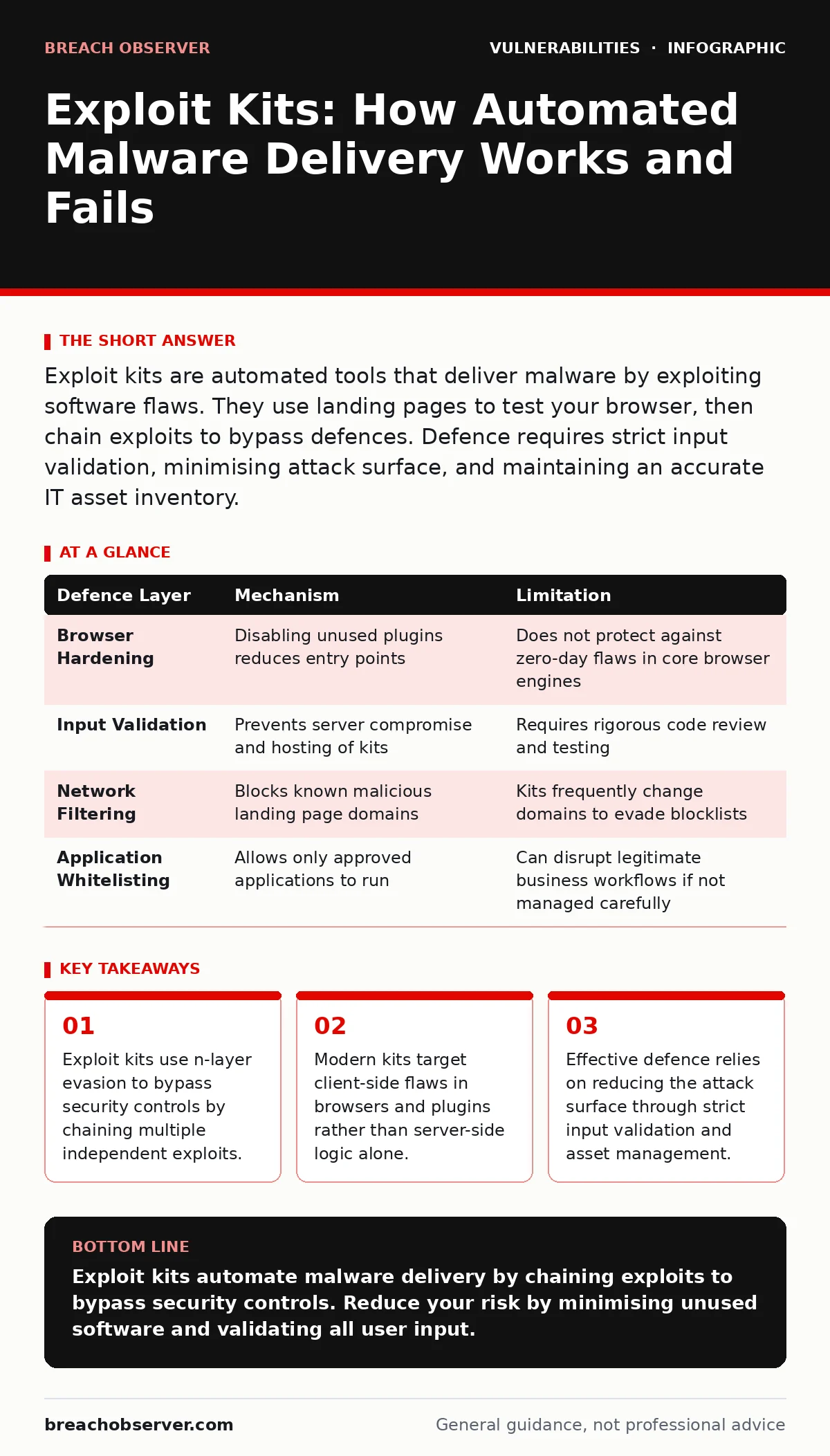
Exploit kits are automated tools that deliver malware by exploiting software flaws. They use landing pages to test your browser, then chain exploits to bypass defences. Defence requires strict input validation, minimising attack surface, and maintaining an accurate IT asset inventory.
What exactly is an exploit kit?
An exploit kit is a semi-automated web server framework that delivers malware to visitors by exploiting software vulnerabilities. It acts as a middleman between a compromised website and the attacker’s payload. The kit presents a landing page that scans your browser for weaknesses before attempting infection. This automation allows attackers to scale their operations without manually targeting individual users.
How does an exploit kit detect my vulnerabilities?
The kit uses client-side scripts to probe your browser for known flaws in rendering engines or plugins. These scripts check for specific versions of software that contain unpatched security holes. If a vulnerability is found, the kit triggers the corresponding exploit module. This detection phase happens silently within the browser window, often before you realise the page has loaded.
Why do exploit kits chain multiple exploits?
Chaining exploits increases the likelihood of successful infection by bypassing different security layers. If your browser blocks one exploit, the kit attempts another using a different vulnerability. This technique, known as n-layer evasion, ensures that no single security control can stop the entire attack. It forces defenders to patch every potential entry point rather than just one.
Can I get infected if my software is updated?
Yes, because exploit kits often target legacy plugins or outdated components that users overlook. Even if your main browser is current, an old Java or Flash plugin can serve as an entry point. Attackers also target zero-day vulnerabilities that have no available patch yet. This is why maintaining an accurate IT asset inventory is critical for identifying all installed components.
How do exploit kits bypass modern security controls?
They use obfuscation techniques to hide malicious code from signature-based detection systems. The kit may encrypt payloads or split them into small fragments that appear harmless individually. Some kits also use legitimate cloud services to host their landing pages, making traffic look normal. This evasion strategy complicates detection for traditional antivirus solutions.
See also: Hacktivism Warning Signs: Spotting Political Intrusions Early · Zero-Click Exploit Warning Signs and Immediate Response Actions
What role do compromised websites play?
Exploit kits are often hosted on websites that have been breached due to weak security configurations. Attackers inject malicious redirects into these sites, sending visitors to the exploit kit’s landing page. This method leverages the trust users place in legitimate domains. It highlights the importance of securing web applications against command injection and other remote code execution flaws.
How do exploit kits handle different operating systems?
The kit detects your operating system and selects the appropriate payload for your environment. Windows, macOS, and Linux each require different exploit chains and malware binaries. The kit serves the correct version automatically, ensuring maximum compatibility. This cross-platform capability allows attackers to target a wider audience with a single infrastructure.
What is the most effective defence against exploit kits?
Reducing your attack surface is the most reliable way to prevent infection. This involves disabling unused browser plugins and keeping all software up to date. You should also implement strict input validation on your own servers to prevent them from becoming hosts. Regularly reviewing your IT asset inventory helps you identify and remove unused components that could be exploited.
| Defence Layer | Mechanism | Limitation |
|---|---|---|
| Browser Hardening | Disabling unused plugins reduces entry points | Does not protect against zero-day flaws in core browser engines |
| Input Validation | Prevents server compromise and hosting of kits | Requires rigorous code review and testing |
| Network Filtering | Blocks known malicious landing page domains | Kits frequently change domains to evade blocklists |
| Application Whitelisting | Allows only approved applications to run | Can disrupt legitimate business workflows if not managed carefully |
Can exploit kits target mobile devices?
Yes, modern exploit kits have expanded to target mobile browsers and applications. They exploit vulnerabilities in mobile operating systems and popular apps. The delivery mechanism is similar, using malicious links or compromised websites. Mobile users are often at higher risk due to less rigorous security practices on personal devices.
How do exploit kits avoid detection by security vendors?
They use fast-flux DNS techniques to rapidly change the IP addresses of their servers. This makes it difficult for security vendors to block specific domains or IPs. Kits also use legitimate content delivery networks to distribute their malicious code. This camouflage allows them to operate for longer periods before being taken down.
What happens after an exploit kit succeeds?
Once the exploit succeeds, the kit delivers a payload such as a remote access trojan or ransomware. This payload establishes persistence on your system and may exfiltrate data. The kit itself does not maintain control; it only facilitates the initial infection. The subsequent damage depends on the capabilities of the delivered malware.
Are exploit kits still relevant in modern security?
Yes, they remain a primary vector for automated malware distribution. While browser security has improved, new vulnerabilities emerge regularly. Exploit kits adapt by targeting these new flaws and using more sophisticated evasion techniques. They continue to be a significant threat to organisations with poor patch management practices.
How can I detect an active exploit kit attack?
Look for unusual browser behaviour such as unexpected pop-ups or redirects. Monitor network traffic for connections to unknown or suspicious domains. Security logs may show failed exploit attempts or blocked malicious payloads. Early detection allows you to isolate affected systems before the payload executes.
Key takeaways
- Exploit kits use n-layer evasion to bypass security controls by chaining multiple independent exploits.
- Modern kits target client-side flaws in browsers and plugins rather than server-side logic alone.
- Effective defence relies on reducing the attack surface through strict input validation and asset management.
Exploit kits automate malware delivery by chaining exploits to bypass security controls. Reduce your risk by minimising unused software and validating all user input.
Frequently asked questions
Do exploit kits only target Windows users?
No, modern exploit kits target multiple operating systems including macOS and Linux. They detect the user’s environment and serve the appropriate payload.
Can a firewall stop an exploit kit?
A firewall can block connections to known malicious servers, but it cannot stop exploits that occur within allowed traffic. You need layered defence including browser hardening.
Are exploit kits legal to use for testing?
Using exploit kits without explicit authorisation is illegal in most jurisdictions. Security professionals should use controlled, legal testing tools instead.
How often do exploit kits update their code?
Exploit kits update frequently to include new exploits and evasion techniques. This rapid iteration makes static defence measures less effective over time.
How this guide was produced: written by the Breach Observer editorial team with AI assistance, checked against the public references listed below, and reviewed when the facts change. See our editorial policy or report an error.