
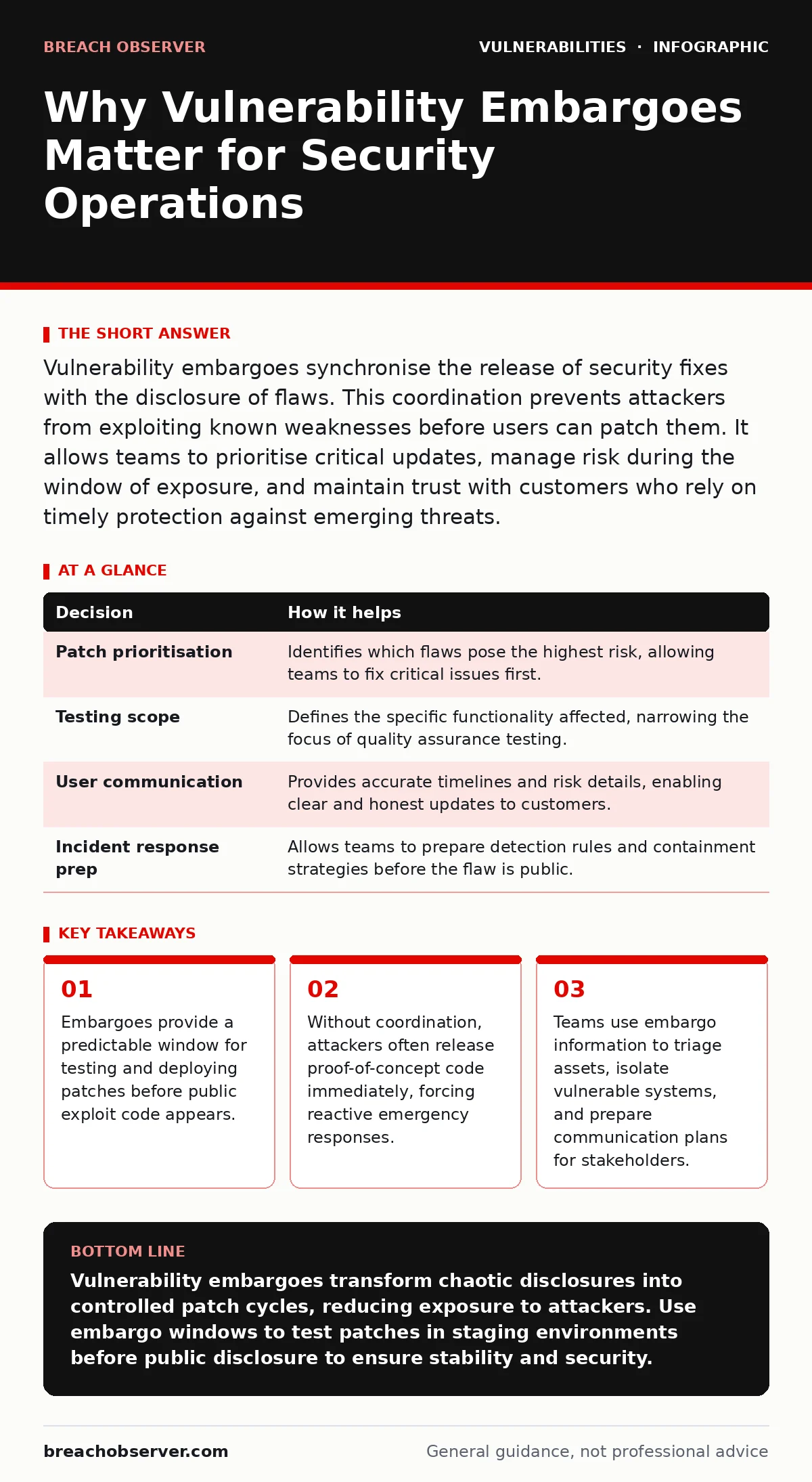
Vulnerability embargoes synchronise the release of security fixes with the disclosure of flaws. This coordination prevents attackers from exploiting known weaknesses before users can patch them. It allows teams to prioritise critical updates, manage risk during the window of exposure, and maintain trust with customers who rely on timely protection against emerging threats.
The Coordination Mechanism Explained
Vulnerability embargoes operate as a temporary agreement between researchers and vendors. The researcher discloses technical details of a flaw to the vendor privately. The vendor develops a fix and sets a publication date. The researcher agrees not to publish the details until that date arrives. This mechanism creates a controlled environment for remediation. It replaces the chaos of immediate public disclosure with a structured timeline. The goal is to minimise the time systems remain exposed without a defence. This window allows security teams to prepare for the update. It also prevents attackers from having an informational advantage.
The process relies on mutual trust and clear communication channels. Both parties understand the risks of premature disclosure. The vendor commits to releasing a fix within a reasonable timeframe. The researcher commits to silence until the fix is available. This balance protects users while acknowledging the researcher’s role in discovery. The mechanism supports the broader goal of improving software security. It ensures that knowledge of a flaw leads to protection, not exploitation. The coordination reduces the likelihood of widespread damage. It transforms a potential vulnerability into a manageable security update.
Decisions Informed by Embargo Data
Security teams use embargo information to make precise operational choices. The data informs resource allocation, testing priorities, and communication strategies. Teams must decide which systems require immediate attention. They must determine how to test patches in isolated environments. They must plan how to inform users of the risk. The following table outlines key decisions and how embargo data assists them.
| Decision | How it helps |
|---|---|
| Patch prioritisation | Identifies which flaws pose the highest risk, allowing teams to fix critical issues first. |
| Testing scope | Defines the specific functionality affected, narrowing the focus of quality assurance testing. |
| User communication | Provides accurate timelines and risk details, enabling clear and honest updates to customers. |
| Incident response prep | Allows teams to prepare detection rules and containment strategies before the flaw is public. |
This structured approach prevents hasty decisions made under pressure. It ensures that resources are directed where they matter most. Teams can avoid the panic that often follows unexpected disclosures. The data provides a foundation for rational action. It supports a proactive rather than reactive security posture. The clarity of the embargo process reduces uncertainty. It allows for better planning and execution. Teams can align their efforts with the vendor’s release schedule. This alignment maximises the effectiveness of the remediation effort. It ensures that the fix is applied correctly and comprehensively. The decision-making process becomes more efficient and less stressful.
The Cost of Uncoordinated Disclosure
Imagine a team that receives no advance notice of a critical flaw. The researcher publishes the details on a public forum. Attackers scan the internet for vulnerable systems within hours. The team discovers the issue through incoming alerts or customer complaints. They must now scramble to find a fix. The vendor may not have a patch ready. The team faces an immediate threat with no defence. This scenario highlights the dangers of uncoordinated disclosure. It forces teams into a reactive mode. They must mitigate risk without a proper solution. They may need to isolate systems, disrupting business operations. The lack of preparation increases the likelihood of a breach.
Attackers exploit the gap between disclosure and patch availability. This window is often short but highly dangerous. The team has no time to test or validate fixes. They must apply whatever is available, risking stability. The stress on the team is immense. The reputation of the organisation suffers. Customers lose trust in the ability to protect their data. The financial impact can be severe. The operational disruption is significant. The security posture is weakened. Uncoordinated disclosure creates chaos and vulnerability. It undermines the efforts of security teams. It benefits attackers who thrive on speed and surprise. The lack of coordination is a systemic risk. It exposes organisations to unnecessary harm.
Operational Use of Embargo Windows
Teams use the embargo window to prepare for the patch release. They begin by identifying all affected systems. They check inventory records and configuration management databases. They determine which systems are exposed to the internet. They assess the risk based on the system’s role. High-value targets receive immediate attention. The team then obtains the patch from the vendor. They test the patch in a staging environment. They verify that the fix resolves the flaw. They check for compatibility with other software. They ensure that the patch does not introduce new issues. This testing phase is critical for stability.
It prevents outages caused by faulty updates. The team documents the testing results. They prepare deployment scripts and instructions. They train support staff on the changes. They update monitoring tools to detect exploitation attempts. The preparation ensures a smooth rollout. It minimises disruption to users. It maximises the effectiveness of the fix. The team is ready to act when the embargo lifts. They can deploy the patch quickly and confidently. The operational readiness reduces risk. It demonstrates professionalism and competence. The team controls the narrative. They protect the organisation proactively.
Edge Cases and Hidden Costs
The embargo process is not without challenges. Vendors may miss the disclosure deadline. Researchers may publish early due to frustration. Teams must have contingency plans for these scenarios. The hidden cost of embargoes is the delay in public awareness. Users may remain unaware of the risk until the fix is released. This delay can be problematic for high-risk environments. Teams must balance transparency with security. They must communicate the risk without causing panic. Another edge case is the complexity of the fix. Some patches require significant changes.
Testing these patches takes time. Teams may struggle to meet deployment deadlines. The pressure to patch quickly can lead to errors. Teams must resist the urge to rush. They must maintain quality standards. The cost of a failed patch can be higher than the risk of the flaw. Teams must weigh these factors carefully. They must make informed decisions. The embargo process requires flexibility. It demands strong communication and coordination. The hidden costs are real but manageable. Awareness of these challenges improves the process. It leads to better outcomes.
See also: Pre-authentication vulnerabilities: detection, exploitation and mitigation · Dependency Scanning Misconceptions That Leave Code Exposed
Integrating with Broader Security Practices
Embargoes work best when integrated with other security practices. They complement security bulletins that provide regular updates. They align with content security policy implementations that restrict code execution. They support the mitigation of zero-click exploits that require no user interaction. Understanding pre-authentication vulnerabilities helps teams prioritise fixes. Awareness of exploit kits informs detection strategies. Knowledge of buffer overflow vulnerabilities aids in testing. Familiarity with WordPress plugin update policies ensures timely patches.
Recognition of default credentials prevents easy access. These practices form a cohesive defence. They reduce reliance on any single measure. They create layers of protection. The embargo process is one part of this ecosystem. It works in concert with other controls. The integration enhances overall security. It provides a more resilient posture. Teams benefit from a holistic approach. They address risks from multiple angles. The combination of practices reduces vulnerability. It improves the ability to detect and respond. The security programme becomes more effective. The organisation is better protected.
Building Trust Through Transparency
The ultimate goal of embargoes is to build trust. Users trust vendors who protect their data. They trust researchers who act responsibly. They trust teams who communicate clearly. Transparency is key to this trust. Teams must be open about the risks. They must be honest about the timelines. They must be clear about the actions required. This transparency fosters a positive relationship. It encourages cooperation and support. It reduces anxiety and uncertainty. The trust built through embargoes extends beyond the immediate issue. It strengthens the overall security culture.
It promotes a mindset of proactive protection. It values the contributions of all parties. The process benefits the entire ecosystem. It improves the security of software globally. It sets a standard for responsible disclosure. It encourages best practices. The trust is an asset. It is valuable and fragile. Teams must nurture it. They must act with integrity. They must prioritise user safety. The embargo process is a testament to this commitment. It demonstrates a shared responsibility. It protects the digital world. It ensures a safer future.
Key takeaways
- Embargoes provide a predictable window for testing and deploying patches before public exploit code appears.
- Without coordination, attackers often release proof-of-concept code immediately, forcing reactive emergency responses.
- Teams use embargo information to triage assets, isolate vulnerable systems, and prepare communication plans for stakeholders.
Vulnerability embargoes transform chaotic disclosures into controlled patch cycles, reducing exposure to attackers. Use embargo windows to test patches in staging environments before public disclosure to ensure stability and security.
Frequently asked questions
How long does a typical vulnerability embargo last?
The duration varies by severity and complexity, but it typically ranges from a few days to several weeks, allowing time for patch development and testing.
What happens if a vendor misses the embargo deadline?
The researcher may publish the details publicly, forcing the team to respond to an active threat without a ready fix, increasing the risk of exploitation.
Can embargoes prevent all attacks?
No, embargoes reduce the window of exposure but cannot prevent independent discovery or exploitation by attackers who find the flaw before the patch is deployed.
How do teams verify an embargo is legitimate?
Teams should verify the source through established channels, check for consistent technical details, and consult with trusted industry contacts to confirm the disclosure.
How this guide was produced: written by the Breach Observer editorial team with AI assistance, checked against the public references listed below, and reviewed when the facts change. See our editorial policy or report an error.